
Family Corner
Gardening galore
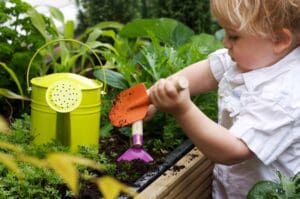
Gardening is a great activity for all ages – it’s good exercise, it gets us outdoors into the fresh air, and, if you grow your own fruit and veg, it can be a good way to ensure a varied, healthy diet.
Getting young children involved in the garden is not only fun for them – and a lovely way for you to spend time together – but can be an introduction to a hobby that will bring joy and relaxation for the rest of their lives.
You don’t need a huge garden, either – small gardens can be beautiful, and if you don’t have an outdoor space at all, you can get busy growing things in pots and in window boxes.
Buy child-sized gardening tools
If you want your child to get involved in digging and planting, it’s a good idea to invest in some child-sized tools.
You don’t have to spend a fortune; at this time of year, supermarkets have lots of ‘outdoor’ toys, and there’s always some little spades, buckets and trowels in amongst the paddling pools and tennis sets.
The items you most need are a small fork and a trowel, but a small pack of little plant pots can also be fairly cheap and can be filled with your child’s very own plants.
Foodie favourites
Growing your own veg is a fantastic way to encourage both a love of gardening and adventurous eating; your child is more likely to want to try things they’ve grown themselves. Plus, it’s a great way to teach cause and effect so children know the connection between the food they eat and where they come from e.g. apples.
- Courgettes are fairly quick growing, and you get excellent flowers before the fast-growing vegetables appear.
- Pumpkins are hugely satisfying; once they appear, it’s great fun to check on them daily to see them swell and change colour, and they look so fantastic glowing orange in your veg patch.
For both of these, plant the seeds in April after the last frost, and they will be ready by late October. You can start them off in small pots to keep them safe until the plants start to produce leaves, then transfer them to a veg patch.
- Tomatoes, peas and potatoes are also easy to grow and will start to sprout quite quickly.
- Strawberries are a great British fruit and not only look beautiful but taste delicious. It’s best to either buy runners (a green stem that will produce a new plant) or a ready-made plant in a pot.
Invite children to plant their own apple seeds or show them that we can eat strawberry seeds. Encourage your child to investigate seeds from the fruit and vegetables that they eat to compare shape and size.
Tall trees from small seeds
What could be more satisfying to a pre-schooler than growing their very own tree? This is easy to do from an acorn (don’t panic – you won’t end up with a huge oak tree in your garden unless you’re planning to live a very, very long time!).
Collect acorns in early to mid-autumn after the first frost. Remove the cups, soak the acorns overnight in warm water, and sow in compost. You won’t see results until early spring, but after the long, cold winter, it’ll seem like magic to see your own little oak trees appearing.
Bees and butterflies
It’s important to talk to young children about how wildlife such as birds and insects are in decline, and rely on gardens for their survival.
When you and your child plan your gardening together, you can think about the kinds of plants that attract bees and butterflies and even create some wildlife habitats together. The RHS website – rhs.org.uk – is a good source for more information.
You can also use the time together to play games such as I Spy or counting the bees and butterflies.
Safety in the garden
You can use gardening to talk about safety, making your child aware of the dangers of eating and handling some plants – for example, avoiding stinging nettles.
You should also always make sure you and your child wash your hands after handling soil and plants.
Written for the Early Years Alliance by Siobhan Godwood and adapted for Under 5 magazine by Jess Gibson.
————————————————————————————————————————————————–
Head lice
How do you catch them?
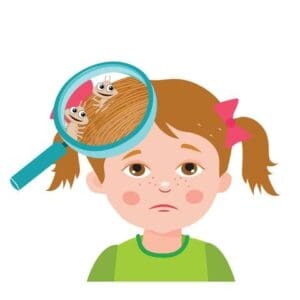
Head lice are small grey or brown wingless insects about the size of a grain of rice when fully grown. You can only catch head lice by having close (head to head) contact with someone who already has them.
The eggs (nits) are very small and dull in colour and are found close to the scalp
cemented onto the hair. Empty egg cases are white and shiny and may be found further along the hair shaft, as the hair grows out. It is very difficult to comb these out. A louse takes 7- 10 days to become fully grown. Only adult lice lay eggs, so once treatment has started you are not infectious.
Remember,
Head lice DO NOT jump, fly or swim but they can walk quickly from head to head.
Anyone can catch head lice. We recommend that everyone in the family should be checked weekly as a routine, it could be the only way to find them. Head lice may not cause itching.
Comb wet conditioned hair from roots to tips in sections using the detector comb as near to the scalp as possible. If live lice are found then follow
Option One – insecticide or Option Two – Conditioner (or a combination of both)
Remember also to check the heads of all close contacts (family members, very close friends)
Never use insecticide to prevent infection, or just in case.
OPTION ONE – TREATMENT WITH LOTION
Use lotions only if living lice are found.
Recommended insecticides are:
PHENOTHRIN (FULL MARKS)
PERMETHRIN (LYCLEAR)
MALATHION (DERBAC M)
- Apply lotion according to the manufacturer’s instructions. DO NOT use hair conditioners with the lotion (including 2 in 1 shampoos)
- Comb hair carefully with a detector comb immediately after treatment.
- Repeat combing (with conditioner) every 3 days for 14 days to remove any lice emerging from eggs.
- Repeat the lotion after 7 days (steps 1 and 2)
- If lice are found at the end of this 14 day period, apply a different insecticide lotion again or option two. Repeat steps 1 to 3.
- After this, if you still find lice, a two week insecticidal free period is recommended.
Continue to condition and comb every other day and check all the contacts again.
OPTION TWO – “WET-COMBING” METHOD
- After washing hair use plenty of hair conditioner, brush or comb through first to get rid of tangles.
- Carefully comb sections of hair from scalp to tip using a ‘nit’ comb. Inspect the comb for lice after every section, removing them before combing through the next section.
- After combing the whole head, the hair conditioner should be rinsed off, and then repeat the combing with the detector comb.
- Repeat this every 3 days for 2 weeks. You may still find immature lice for up to 10 days, do not worry.
If the above regime does not cure the infection, CARBARYL (only available from your Family Doctor) may be used, combined with the same combing treatment. Seek medical advice for babies under 6 months, during pregnancy or if suffering from asthma.